

Messages from the Cell
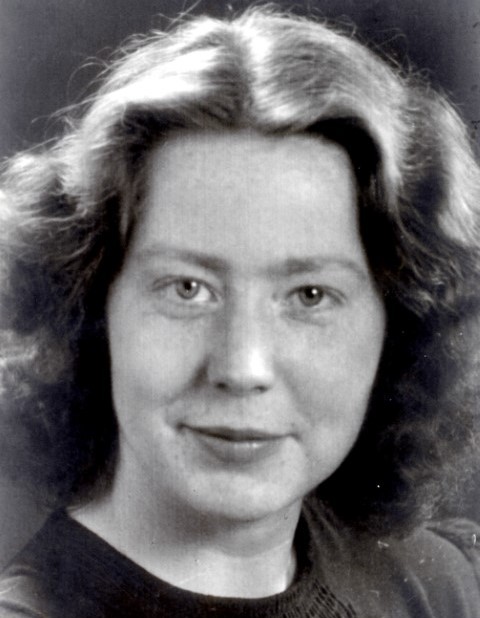
De Koepel in Haarlem- Cel 55
Good to have you here. You are standing in front of cel 55 in front of the information panel next to the door.
Please find the translations of this information panel and of the content on the walls of cell 55 below.
Start at the information panel outside the cell.
Cell 55 – Hannie Schaft, woman in the resistance
Spatial installation, Koepel Haarlem, 2026
This space depicts the final days of resistance fighter Hannie Schaft (1920–1945): : in what way are you like Hannie?
In this cell, close to the place where she was imprisoned during World War II, her final days have been brought to life: her role in the resistance, her courage, and her death.
Behind the work
Charlotte Schot (Art Director), Liesbeth Rood (Theatre Producer) and Christel Bouwmeester (Visual Artist) created this spatial installation on behalf of the National Hannie Schaft Foundation, together with many other volunteers.
Thanks to our partners
The refurbishment & the artist expression animation on the exhibition wall was made financially possible by:
- Municipality of Haarlem
- Haarlem school Het Schoter, Hannie’s former secondary school
- Stichting van Stigt-ing
- Cultuurkoepel Foundation
- Bequest of Jeroen Pliester, former chairman of the National Hannie Schaft Foundation
⇒ Now, please step inside the cell
On the wall on your left side, the story begins with a short introduction to the life of Hannie Schaft.
Along the long wall to the left, the text continues with the story of her final days.
1920 – HANNIE SCHAFT’S CHILDHOOD
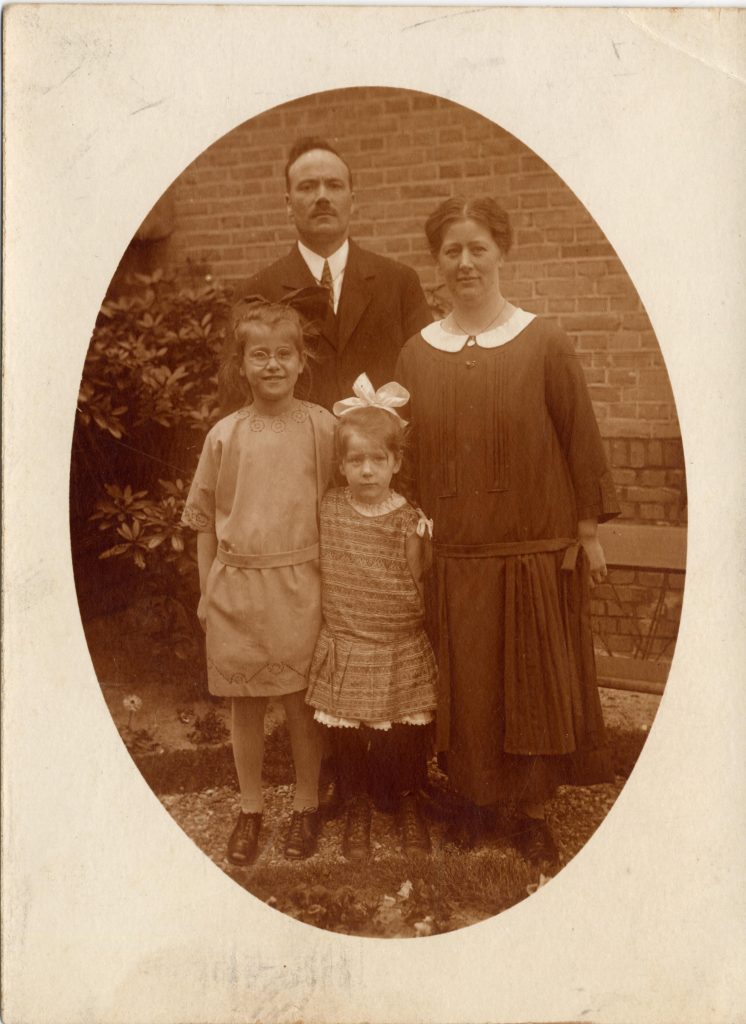
1920 – Hannie Schaft’s childhood
On 16 September 1920, Jannetje Johanna Schaft was born in Haarlem. She was known as Jo or Jopie. She had a sister, Annie, who was five years older. Annie died of diphtheria in 1927. Jo grew up as a shy, intelligent girl who loved reading and had a strong sense of justice.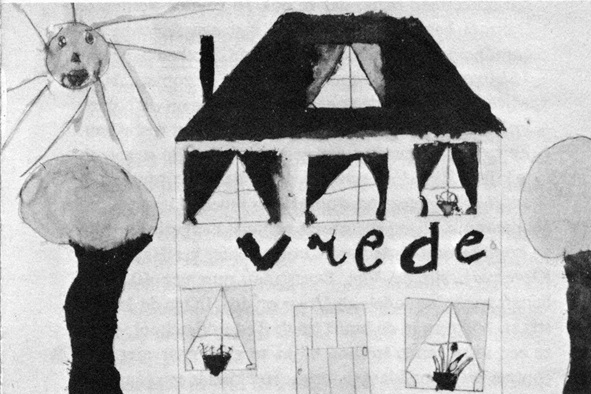
1938 – JO STARTS UNIVERSITY
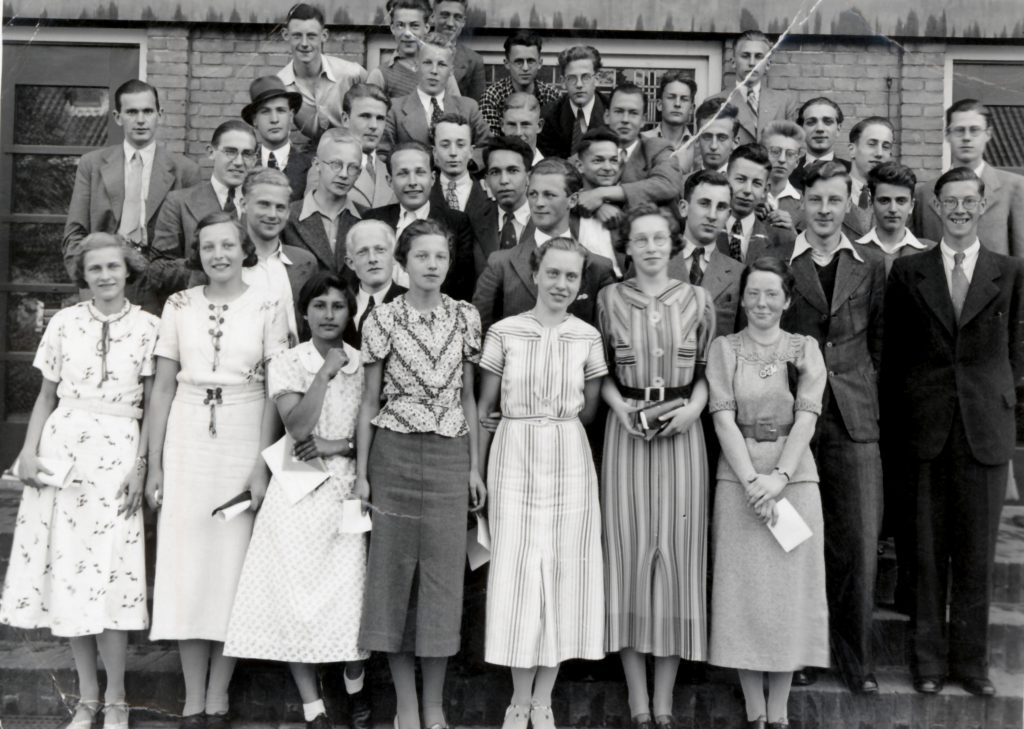
1938 – JO STARTS UNIVERSITY: FEW GIRLS DID THAT BACK THEN
At the age of 18, Jo begins studying law in Amsterdam (1938). She joins the Amsterdam Women’s Students’ Association (AVSV).
Jo has many friends, including two Jewish students, Philine Polak and Sonja Frenk. During her law studies, she specialises in international law.
She dreams of one day reviving the League of Nations (later the United Nations – UN).
1940 – THE WAR BEGINS: JO WITNESSES THE INJUSTICE AGAINST JEWS
The Netherlands is occupied by Nazi Germany on 15 May 1940.
Soon, a series of anti-Jewish measures are introduced: the possessions of Dutch Jews are looted and their freedom of movement is increasingly restricted.
Jo is deeply moved by the exclusion, hatred and injustice directed at Jews. “If they are no longer allowed through that park, I won’t go through it either.”
1942 – JO STANDS UP FOR HER JEWISH FRIENDS
From May 1942, Jews were required to wear a Star of David and had a ‘J’ added to their identity cards. They were also barred from entering public spaces, such as cinemas, swimming pools and shops.
Jo steals two identity cards from the changing room at the swimming pool. She has them altered by a fellow student so that her friends Sonja and Philine can use them. This is her first real act of resistance.
1943 – Woman in the Resistance
1943 – JO DEDICATES HER LIFE TO EQUALITY AND JUSTICE
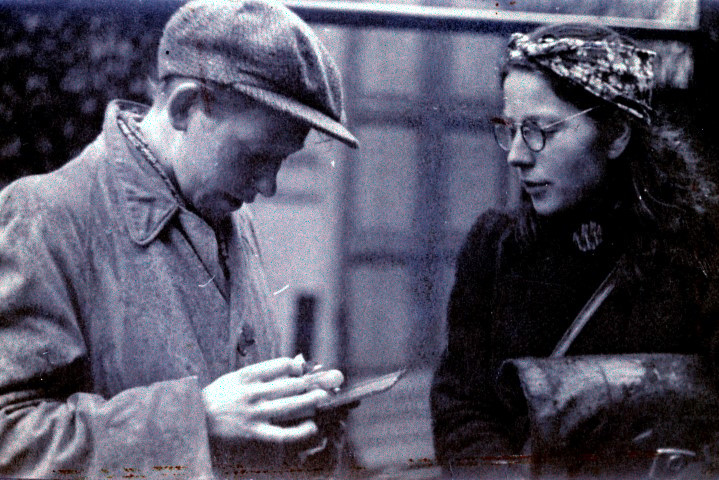
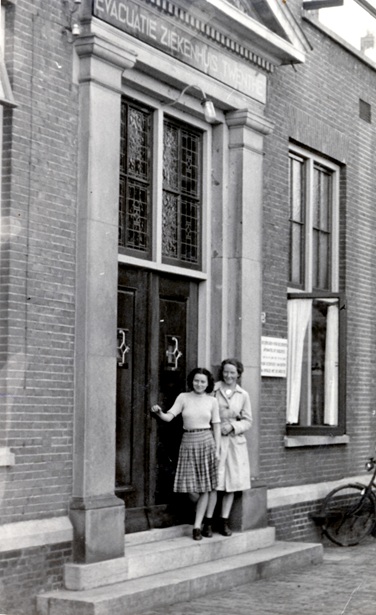
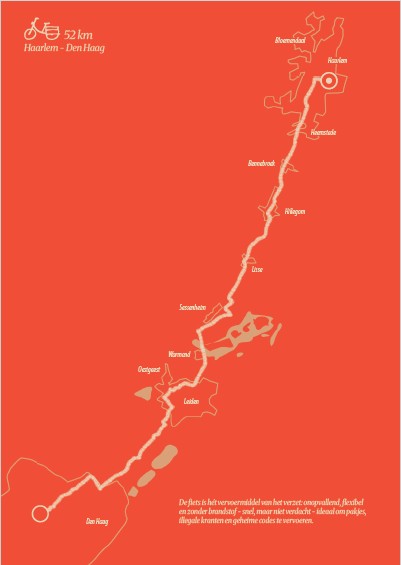
At the Council of Resistance, Jo meets Truus and Freddie Oversteegen. The three young women become friends and work closely together. They gather intelligence on German defences, transport underground newspapers and weapons, arrange for false identity papers, and take people in hiding to new addresses. Jo takes shooting lessons and later carries out attacks – usually in pairs – on German officers and traitors. She can get anywhere thanks to a forged identity card (Ausweis) bearing official stamps.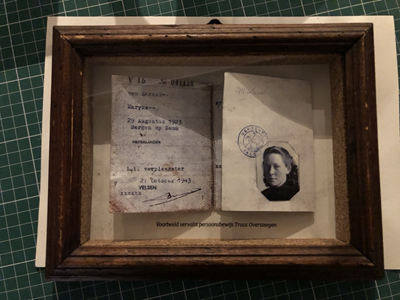
1944 – From unarmed to armed resistance
...because there was no other choice...
1944 – THEN EVERYTHING GOES WRONG
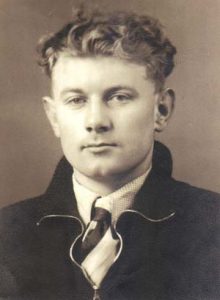
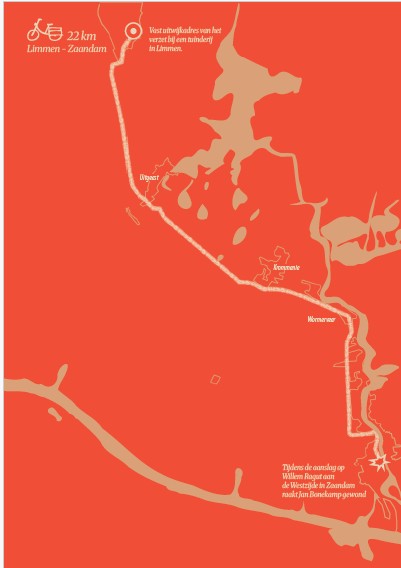
The attack, carried out with comrade Jan Bonekamp, on a collaborating police captain on 21 June fails. Jan is seriously injured in the process. Hannie manages to escape. Jan dies shortly afterwards from his injuries.
The Sicherheitspolizei raid Jo’s family home and take her parents hostage in the hope that the ‘Girl with the Red Hair’ will turn herself in. Jo wants to come out of hiding, but Truus and Freddie convince her that if she does, the German occupiers will not let her parents go anyway. Jo remains in hiding. After a few weeks, her parents are released.
In the summer of 1944, Jo was in hiding in Haarlem. She was inconsolable, on the verge of a breakdown and deeply depressed following the failed assassination attempt and the death of her friend and comrade Jan Bonekamp.
1944 – JO BECOMES HANNIE
The ‘Girl with the Red Hair’ has been spotted at various attacks. For her own safety, she must stay indoors. She therefore dyes her hair black and puts on a pair of glasses: a new look with a new identity card. From now on, she is Johanna Elderkamp. Known as Hannie, born in Zurich (Switzerland). Now she can resume her resistance work alongside Truus and Freddie. She is more determined than ever to continue the fight for equality and justice. Hannie now wants to focus solely on the most dangerous aspects of the resistance.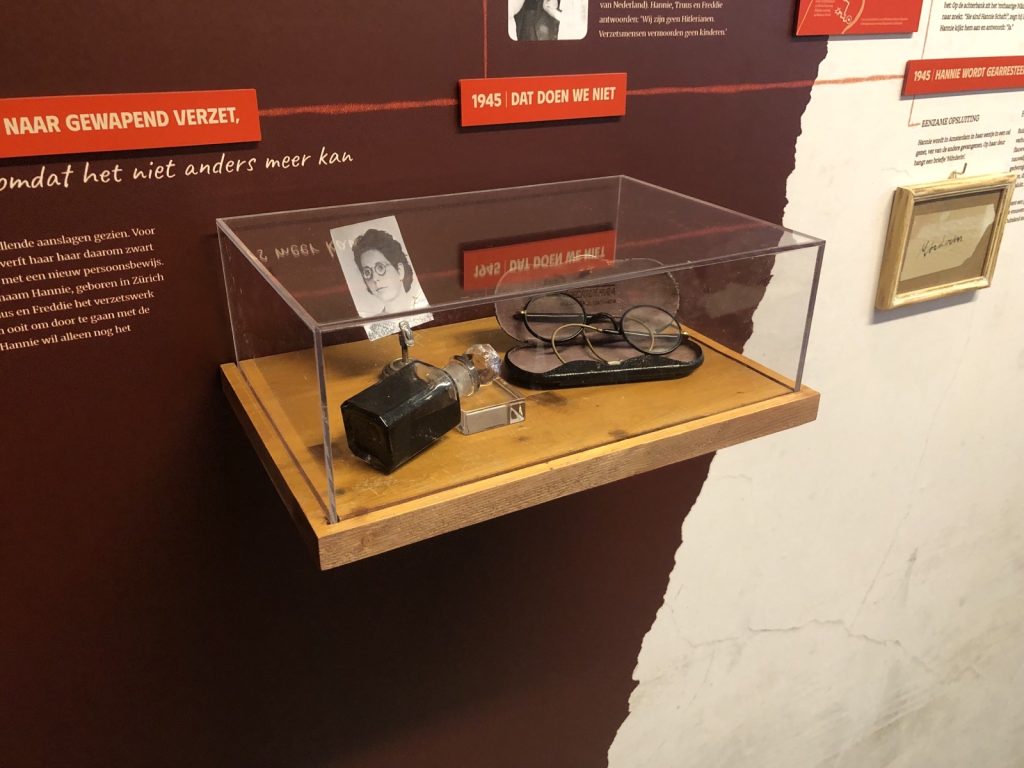
1945 – We won’t do that

1945
The elimination of collaborators continues relentlessly. Because it has to, and there is no other option. In a short space of time, Hannie carries out eight attacks alongside other members of the resistance. By no means all of the attacks are successful. During one failed attack, Hannie is wounded and has to recover at a different safe house.We won’t do that
The Resistance has a plan to free a group of imprisoned Resistance fighters. Hannie, Truus and Freddie are given the task of kidnapping the children of Reichskommissar Seyss-Inquart (the German leader of the Netherlands). Hannie, Truus and Freddie reply: ‘We are not Hitlerites. Resistance fighters do not kill children.’1945 – Hannie is arrested
21 March
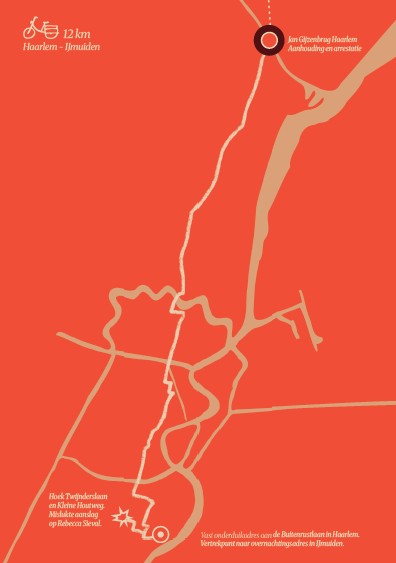
In the early evening of 21 March 1945, Hannie cycles to IJmuiden with large stacks of ‘Vrij Nederland’ and ‘De Waarheid’ in her panniers. At the Jan Gijzenkade, she is stopped for a check. Her panniers are opened and the soldiers find the illegal newspapers.ARRESTED
Hannie is arrested and detained here in the remand centre following the discovery of illegal leaflets. When her belongings are confiscated, the guards notice that Hannie’s handbag is unusually heavy. They open it and find her gun. Hannie is busted.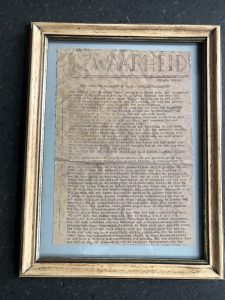
UNMASKED
That very night, Hannie is driven to Amsterdam prison. The driver is Emil Rühl, a German member of the Sicherheitsdienst (SD). He watches the prisoner through the rear-view mirror. He notices her black hair with patches of red roots. Suddenly he realises: sitting in the back seat is the ‘red-haired girl’ the police have been searching for all this time. “Sie sind Hannie Schaft!”, he says slowly. Hannie looks at him and replies: “Yes.”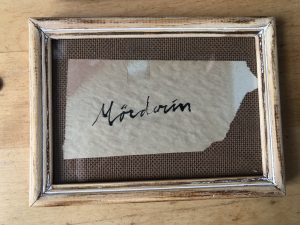
SOLITARY CONFINEMENT
In Amsterdam, Hannie is placed in a cell on her own, far away from the other prisoners. A note reading ‘Murderess’ hangs on her door.
HANNIE GIVES NOTHING AWAY
For over three weeks, Hannie is interrogated day and night. She is made to stand in a corner for hours on end, until she is on the verge of fainting; she is forced to wash the dye out of her hair and is allowed hardly any sleep. Hannie is given nothing to eat. She is forced to drink coffee laced with stimulants, intended to make her talk. This fails. Hannie says nothing and betrays no one.
She confesses to a few attacks: as a result, five other women are released who were to be sent to Germany for those attacks…
1945 – With her head held high
17 april
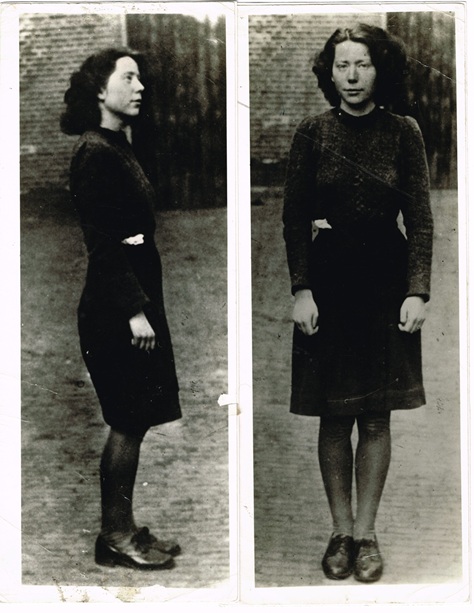
Hannie Schaft is taken from her cell at the crack of dawn. As soon as she sees the German criminal secretary Mattheus Schmitz and the notorious Dutch detective Maarten Kuiper, she knows her end has come. She takes a deep breath and screams as loud as she can.
Hannie is pushed into a van and leaves Amsterdam prison, flanked by two armed Germans. In Haarlem, another soldier gets in, carrying a shovel. They drive on towards the beach.
On Zeeweg, the van suddenly takes a sharp right turn and drives down a sandy track. Then it stops.
Hannie is pulled out of the car. Maarten Kuiper grabs her and together they walk down the sandy path, into the dunes. Behind them walk two soldiers, one carrying a weapon and one carrying a spade. Hannie twists her ankle, but she doesn’t make a sound. She walks on with her head held high.
With her head held high
Suddenly, a loud gunshot rings out across the silent dunes. Blood drips onto Hannie’s shoulder. She has a large wound above her ear. Hannie turns round and looks at the soldier who has shot her. “Ouch!” is the last thing she says before Maarten Kuiper shoots her dead. Hannie is buried on the spot in the dunes.
EPILOGUE
⇒ Please find this epilogue on the table, at the back of the cell by the window.
Truus and Freddie Oversteegen held out hope until after the liberation that Hannie, like them, had survived the war. It was not until 1 June 1945 that her body was found in the dunes.
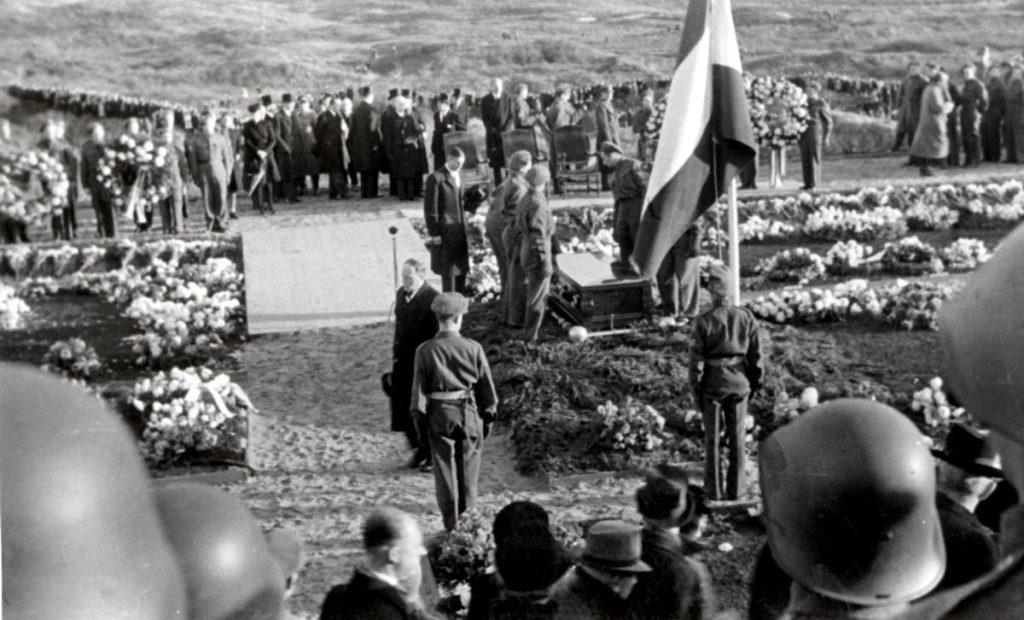
A few months after the end of the Second World War, on 27 November 1945, Jannetje Johanna Schaft was reburied at the Bloemendaal Cemetery of Honour, in the presence of Queen Wilhelmina.
The resistance fighter Hannie Schaft is commemorated every year on the last weekend of November in Haarlem.
The commemoration is organised by the National Hannie Schaft Foundation. This foundation was established on 3 June 1996 by Truus and Freddie, friends and fellow resistance fighters of Hannie. They set up the foundation to keep the memory of Hannie Schaft alive, both as a person and as a symbol of the (women’s) resistance.

